

The Four Cornerstones of Optimal Health: A Holistic Framework for Mind, Body, and Self
Optimal health is often misunderstood as simply “feeling okay” or being free from illness. In reality, true health is far more complex and deeply interconnected. It is not something achieved by focusing on one area of life while neglecting others. Instead, optimal health emerges when multiple internal systems work together in balance.
At InnerWorks Healing Therapy, optimal health is understood through a holistic lens—one that recognizes the mind, body, emotions, and sense of self as equally important and deeply intertwined. This approach is reflected in the four cornerstones of optimal health: physical health, mental health, emotional health, and self health.
Each cornerstone supports the others. When one becomes weakened, the entire foundation can feel unstable. When all four are supported, individuals often experience greater resilience, clarity, and overall well-being.
This article explores each cornerstone in depth, helping you understand how they interact, why they matter, and how therapeutic support can help strengthen all four.
Why a Four-Cornerstone Approach to Health Matters
Many people grow up learning that health is compartmentalized. Physical symptoms are treated separately from emotional distress. Mental health is discussed as if it exists independently from the body. Self-criticism is normalized, while self-compassion is often dismissed.
However, the nervous system does not operate in compartments.
- The body responds to stress and emotional pain.
- Thoughts influence physical sensations.
- Emotions shape behavior and self-perception.
- How you relate to yourself affects every aspect of health.
A holistic framework allows for a more accurate understanding of human experience. The four cornerstones of optimal health offer a way to view healing as a process of integration, rather than a series of isolated fixes.
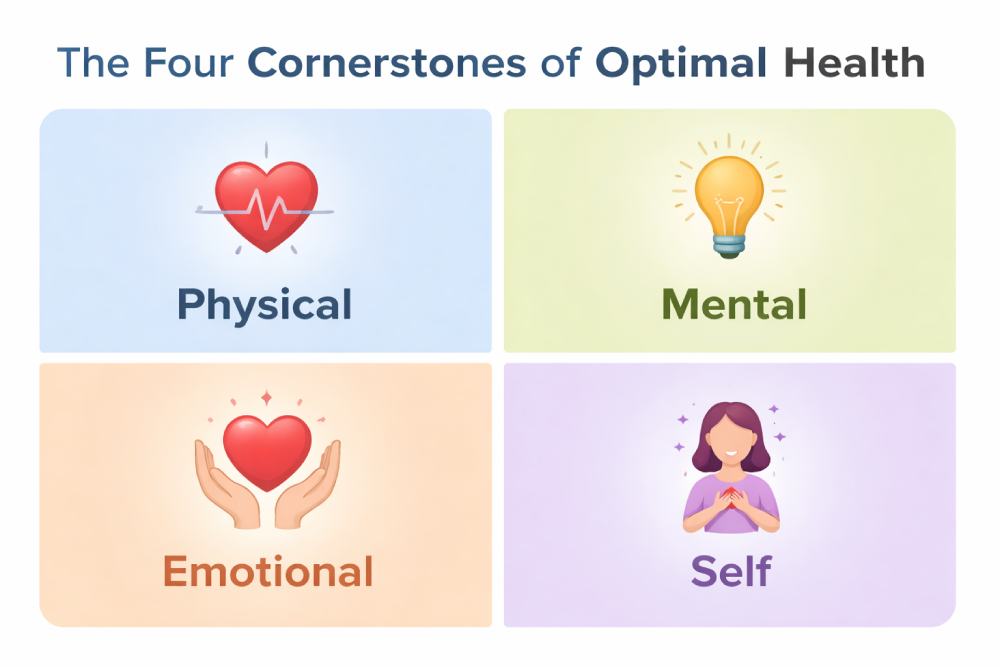
Cornerstone One: Physical Health – Building a Caring Relationship With the Body
Physical health is often reduced to diet, exercise, and sleep. While these factors matter, physical health goes much deeper. It includes how you listen to your body, how you respond to physical signals, and how safely your nervous system functions.
Listening to Subtle Physical Cues
The body is constantly communicating. Signals such as tension, fatigue, shallow breathing, restlessness, or pain are not problems to ignore—they are messages asking for attention.
Many people learn to override these cues due to stress, trauma, or societal expectations. Over time, this disconnection can lead to chronic tension, burnout, or physical symptoms with no clear medical explanation.
Caring for physical health means asking:
- Am I noticing what my body is telling me?
- Do I pause when my body signals distress?
- Do I respond with care or judgment?
Nervous System Regulation and Safety
A regulated nervous system is essential for physical well-being. When the body perceives danger—real or perceived—it activates stress responses that prepare for survival. If these responses become chronic, the body remains stuck in a state of activation.
Physical health includes the ability to:
- Recognize when your body feels triggered
- Understand how stress shows up physically
- Learn tools to bring the body back to safety
Trauma-informed therapy often focuses on restoring a sense of safety within the body, allowing physical systems to function more smoothly.
Responding Without Criticism
Many people respond to physical discomfort with frustration or shame. This internal criticism often increases stress and worsens symptoms.
Optimal physical health involves cultivating a compassionate response:
“What does my body need right now?”
instead of
“What is wrong with me?”
This shift alone can significantly improve physical and emotional resilience.

Cornerstone Two: Mental Health – Understanding the Power of Thought
Mental health is not about eliminating negative thoughts. It is about developing awareness of thought patterns and learning how to relate to them differently.
Awareness of Internal Dialogue
The words you say in your mind shape how you experience yourself and the world. Without awareness, thoughts can feel like unquestionable truths.
Mental health begins with noticing:
- How you speak to yourself
- Which thoughts repeat during stress
- Whether your thoughts are supportive or critical
Awareness creates space for choice.
Skills for Redirecting Rumination
Rumination occurs when the mind becomes stuck replaying distressing thoughts or scenarios. While often an attempt to solve problems, rumination usually increases anxiety and emotional exhaustion.
Therapeutic work can help individuals:
- Recognize when rumination begins
- Learn grounding and refocusing techniques
- Develop healthier mental habits
Mental health is not about controlling thoughts, but about learning how to redirect attention with compassion.
How Language Shapes Perception
Internal language influences how people interpret relationships, challenges, and personal worth. A harsh internal voice can distort reality, making the world feel unsafe or overwhelming.
Shifting mental language often leads to:
- Reduced anxiety
- Greater emotional flexibility
- Improved self-confidence

Cornerstone Three: Emotional Health – Feeling, Connecting, and Regulating
Emotional health is not about constant happiness. It is about the capacity to experience emotions without fear or avoidance, and the ability to connect meaningfully with others.
The Role of Safe Connection
Humans are inherently relational. Emotional health thrives when people feel safe with others.
Consider:
- Do you have relationships where you feel emotionally secure?
- Are you able to be authentic with others?
- Do you spend time connecting in person?
When emotional safety is lacking, individuals may withdraw, suppress emotions, or rely on unhealthy coping mechanisms.
Emotional Regulation Versus Suppression
Many people believe that being emotionally healthy means not feeling uncomfortable emotions. This belief often leads to emotional suppression, which can manifest as anxiety, numbness, or physical symptoms.
Emotional health involves:
- Allowing emotions to exist without judgment
- Learning how to regulate intense feelings
- Understanding that emotions provide valuable information
Emotions are not problems—they are signals.
Redefining Emotional Strength
True emotional strength lies in the ability to stay present with emotions while knowing they are temporary. Therapy helps individuals build this capacity in a safe and supportive environment.
Cornerstone Four: Self Health – The Relationship You Have With Yourself
Self health refers to how you perceive, treat, and relate to yourself internally. It influences every other cornerstone.
Cultivating Self-Compassion
Many people carry shame for past mistakes or earlier versions of themselves. Self health involves learning to hold these experiences with understanding rather than judgment.
Questions to reflect on:
- Can I be kind to myself when I struggle?
- Do I forgive myself for past choices?
- Do I allow growth without punishment?
Self-compassion supports healing across all areas of health.
Seeing Yourself Clearly
Healthy self-perception exists between two extremes:
- Limiting beliefs that diminish self-worth
- Inflated self-views that disconnect from authenticity
Self health means seeing yourself clearly and honestly, without distortion.
Intuition Versus Intrusive Thoughts
Many individuals struggle to differentiate intuition from intrusive thoughts. Intuition tends to feel calm and grounded, while intrusive thoughts are often fear-driven and urgent.
Therapeutic support can help individuals:
- Identify intuitive signals
- Reduce the impact of intrusive thinking
- Rebuild trust in themselves
How the Four Cornerstones Work Together
These four cornerstones are deeply interconnected:
- Chronic stress impacts physical and mental health
- Negative self-talk affects emotional regulation
- Emotional suppression leads to physical symptoms
- Disconnection from self weakens all areas of well-being
Supporting all four creates a stable foundation for long-term health.

How Therapy Supports the Four Cornerstones of Optimal Health
Therapy at InnerWorks Healing Therapy supports individuals in strengthening all four cornerstones through compassionate, trauma-informed care. Therapy is not about fixing something broken—it is about reconnecting with what has always been present.
Through therapeutic work, individuals can:
- Learn to regulate their nervous system
- Understand and shift thought patterns
- Build emotional resilience
- Develop a healthier relationship with themselves
Encouragement to Contact Therapist Amber Pearce
If you are experiencing physical stress responses, mental overwhelm, emotional disconnection, or struggles with self-compassion, you do not have to navigate these challenges alone.
Therapist Amber Pearce works with individuals facing anxiety, trauma, emotional regulation difficulties, chronic stress, self-esteem concerns, and life transitions. Her holistic approach supports healing across the physical, mental, emotional, and self dimensions of health.
Reaching out for support is a powerful step toward balance, clarity, and sustainable well-being.
Frequently Asked Questions (FAQs)
1. What are the four cornerstones of optimal health?
They are physical health, mental health, emotional health, and self health.
2. Why is physical health more than exercise and diet?
Physical health includes nervous system regulation and how you respond to bodily cues.
3. How does mental health affect physical symptoms?
Chronic stress and negative thought patterns can manifest as physical tension or pain.
4. Is emotional health about being happy all the time?
No. Emotional health involves allowing all emotions and regulating them effectively.
5. What does self health mean?
Self health refers to your relationship with yourself, including self-compassion and self-perception.
6. Can therapy help all four cornerstones?
Yes. Therapy addresses the interconnected nature of mind, body, emotions, and self.
7. What if I feel disconnected from my body?
Therapy can help you safely rebuild body awareness and trust.
8. How do I stop negative self-talk?
Awareness, redirection skills, and self-compassion practices are key.
9. What is the difference between intuition and anxiety?
Intuition feels calm and grounded; anxiety feels urgent and fear-based.
10. When should I seek professional support?
If stress, emotions, or self-criticism impact daily life, professional support can help.
What Is DBT and Why Does It Help?
How Many People Detransition?
Life Enhancement Skills Every Adult Should Master for Emotional Growth